
1. Executive Summary
The AI for Beginners Bootcamp (December 2025) was an eight-week, fully online capacity- building initiative organized by the National Centre of Artificial Intelligence (NCAI), University of Engineering and Technology (UET) Lahore. The program aimed to introduce foundational Artificial Intelligence (AI) concepts to students from vocational institutions and higher secondary (HSSC) backgrounds, particularly those from remote and underserved regions with limited access to structured AI education.
As Artificial Intelligence increasingly influences education, employment, and entrepreneurship, students outside mainstream university systems often face exclusion due to limited exposure, lack of trained instructors, and inadequate learning resources. This skills gap restricts employability and participation in the digital economy. The AI for Beginners Bootcamp was designed to address this challenge by providing accessible, beginner-level AI education focused on practical relevance and ethical awareness.
The curriculum emphasized simple language, real-life examples, and progressive learning, enabling students with minimal technical background to engage confidently with AI concepts. Participants were introduced to core AI principles, machine learning basics, Generative AI tools, audio and image-based AI applications, document intelligence, cybersecurity fundamentals, and ethical AI practices. The program also highlighted the use of AI for learning support, productivity, and introductory income-oriented activities.
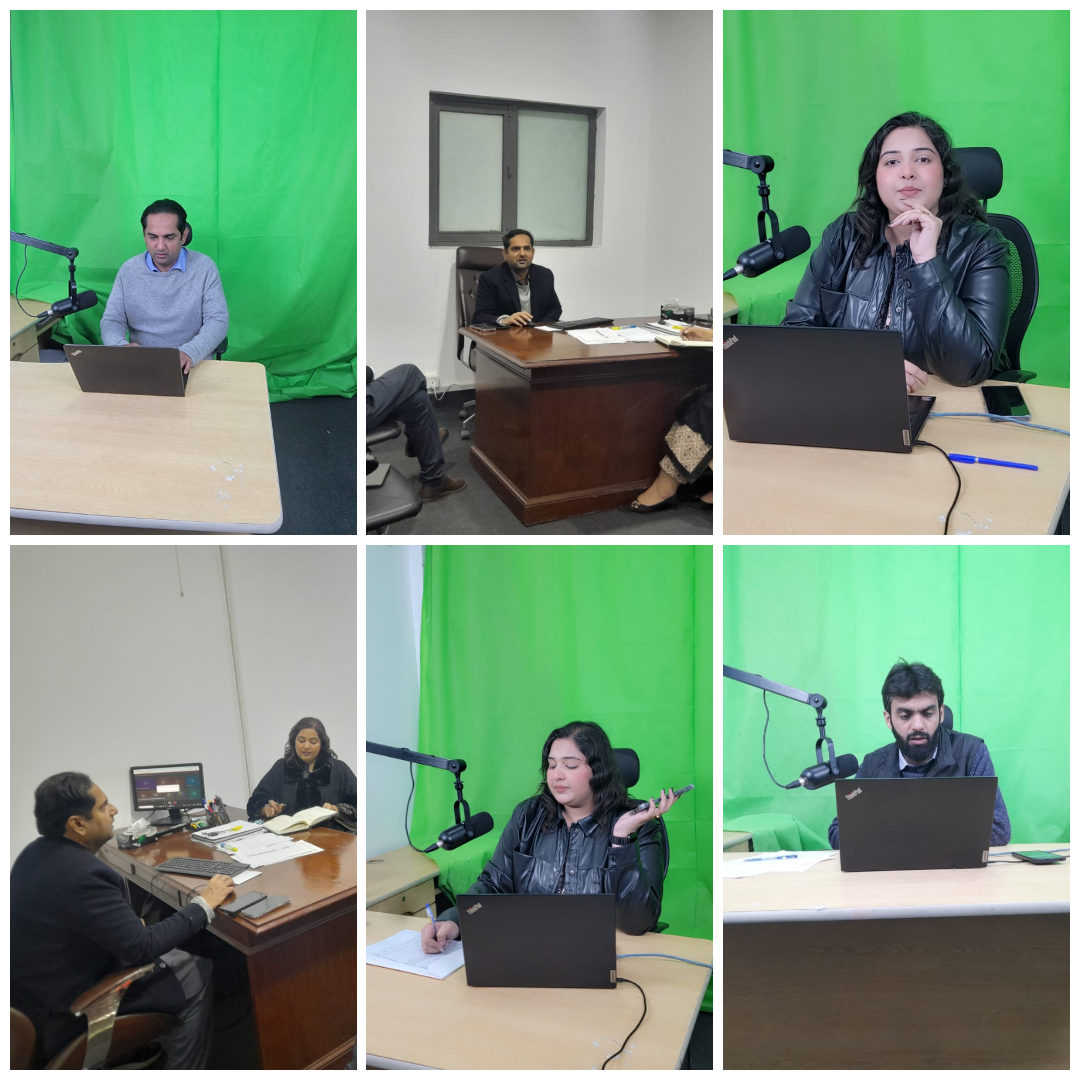
Training was delivered through an interactive, instructor-led online model, combining conceptual lectures with live demonstrations and question-and-answer sessions. To ensure inclusion and continuity, recorded lectures and learning materials were shared after each session, supporting self-paced learning and students facing connectivity constraints.
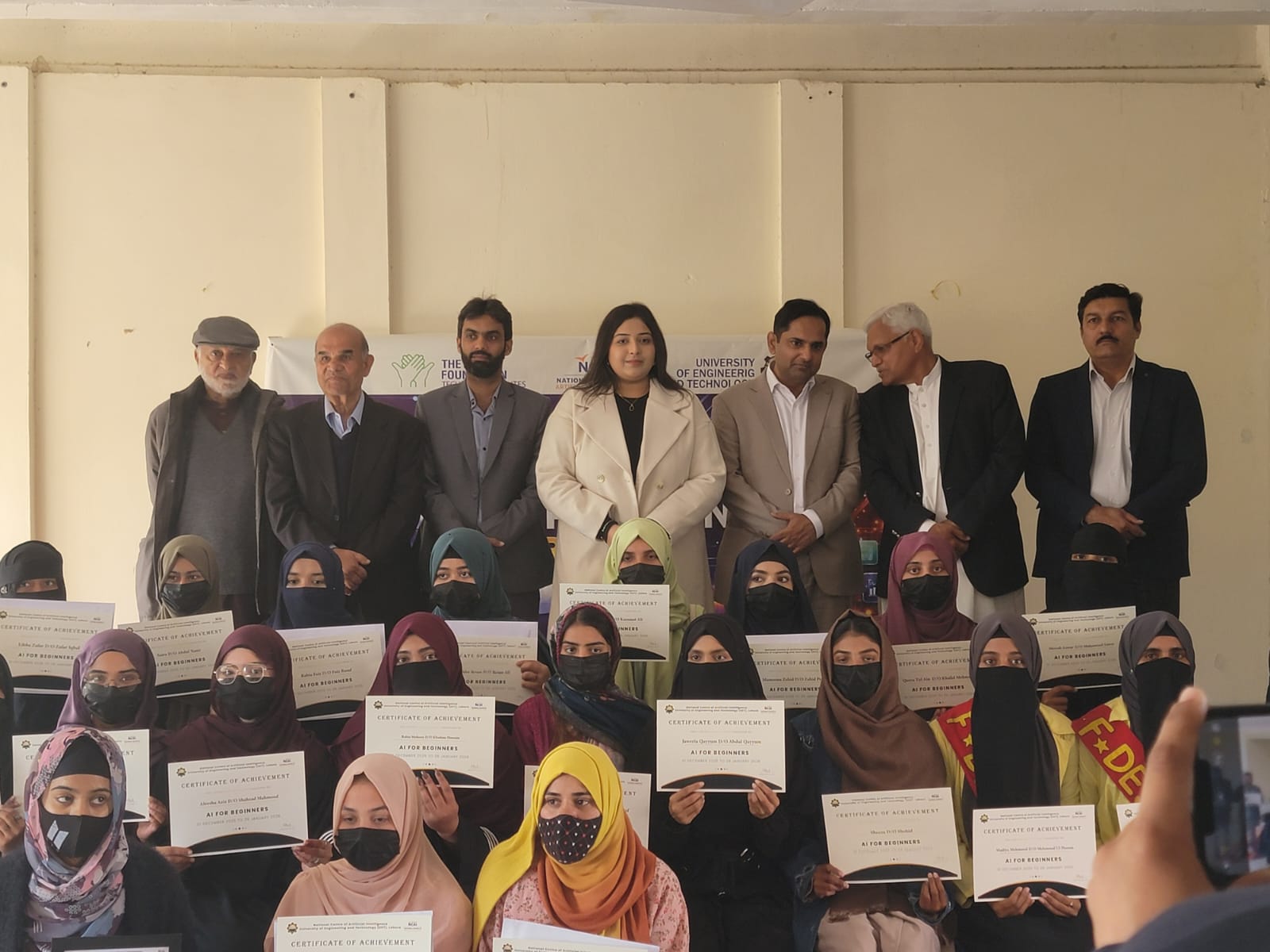
A total of 150 applications were received through partner institutions and regional outreach networks. From these, 80 students were selected, with an average live attendance of approximately 60 students throughout the program. By the end of the eight-week duration,
45 students successfully completed the bootcamp and qualified for certification, reflecting sustained engagement and achievement of learning objectives.
Participants represented diverse regions, including Baltistan, South Punjab, Gujrat, Panjjan, Kharian, and a limited number from Lahore, ensuring both geographic and socio- economic diversity.
Overall, the AI for Beginners Bootcamp (December 2025) presents a scalable and high- impact model for introducing AI literacy at the grassroots level. By equipping vocational and higher secondary students with foundational AI knowledge, practical digital skills, and ethical awareness, the initiative contributes meaningfully to workforce readiness, youth empowerment, and inclusive digital transformation in Pakistan.
This initiative was made possible through the generous sponsorship of ULEF Pakistan

2. Background & Rationale
The rapid integration of Artificial Intelligence (AI) across industries has created a growing need for basic AI literacy, not only within universities but also across vocational and higher secondary education streams. However, students from non-traditional academic backgrounds often have limited access to structured AI learning due to gaps in curriculum, infrastructure, and trained faculty. This has widened the digital skills divide and reduced employability for an otherwise capable segment of the youth population.
Students enrolled in vocational institutes and higher secondary programs typically focus on practical skills but remain underserved in emerging technologies such as AI, Generative AI, and cybersecurity. Limited exposure to these areas restricts their ability to adapt to a rapidly evolving job market and participate in digital economic opportunities.
The National Centre of Artificial Intelligence (NCAI), UET Lahore, is addressing this gap by democratizing AI education through accessible, beginner-level programs tailored for vocational and higher secondary students. By simplifying complex concepts and delivering training through online, instructor-led sessions, NCAI UET extends AI knowledge beyond traditional university settings.
This initiative aligns strongly with workforce development and digital inclusion goals, contributing to improved employability, inclusive growth, and sustainable skill development. It also offers a scalable model for sponsors seeking high-impact interventions in education, youth empowerment, and digital transformation.

3. Program Overview
The AI for Beginners Bootcamp (December 2025) was designed as an introductory, foundation-level training program for students from vocational institutions and higher secondary education backgrounds. The program aimed to make Artificial Intelligence understandable, practical, and relevant for learners with limited prior exposure to advanced technologies.
The teaching approach combined conceptual understanding, practical demonstrations, and ethical awareness to ensure that students not only learned what AI is, but also how it can be used responsibly in academic, vocational, and early professional contexts.
Special emphasis was placed on simple language, real-life examples, and beginner- friendly explanations to accommodate students from diverse educational backgrounds. Recorded lectures and learning materials were shared after each session to support accessibility, self-paced revision, and students with limited internet connectivity.